


In the paintings of Ebenezer Samuel Akinola, movement becomes ritual. His figures do not simply occupy space, they traverse it with the solemnity of a ceremonial procession, as though crossing invisible thresholds between the earthly and the spiritual, the contemporary and the ancestral, the intimate and the mythic.
At first glance, the works appear rooted in portraiture and staged figuration. Yet Akinola’s practice extends far beyond representation. His paintings are meticulously constructed realities, imagined, directed, choreographed, and performed before they are translated into paint. Working almost like a film director, the artist dresses his subjects, drapes fabrics around the body, photographs carefully orchestrated scenes, and then reconstructs these moments through painting. The resulting works carry the psychological intensity of cinema while retaining the stillness and material gravity of classical painting.
This cinematic sensibility is central to the emotional force of the work. Akinola understands how bodies communicate collectively. Figures walk toward the viewer with an almost mythological authority or turn away into ambiguous spaces that suggest departure, exile, transcendence, or spiritual passage. The paintings often resemble suspended film stills extracted from unwritten narratives. One senses not only the image itself, but also the unseen moments before and after it.
The procession becomes a recurring visual language within his practice. Across cultures and histories, processional movement has long signified ritual transformation: coronations, funerary rites, pilgrimage, initiation, migration, communal mourning. Akinola draws from this symbolic inheritance, yet he resists reducing his figures to historical archetypes or ethnographic references. Instead, he stages contemporary mythologies. Sneakers, handbags, contemporary accessories, and modern styling appear alongside sculptural drapery and ceremonial silhouettes. This collision between the sacred and the everyday destabilizes time itself. The figures exist simultaneously in the present moment and outside of it.
The drapery plays a particularly significant role within these works. While the artist’s technical mastery of fabric is extraordinary, the cloth functions as more than a display of painterly skill. It becomes architecture, concealment, atmosphere, and symbolic extension of the body. The flowing garments transform the figures into sculptural presences that appear partially veiled, suspended between revelation and obscurity. Faces emerge softly from shadow and light, while folds of fabric absorb and redirect the emotional energy of the composition. The body is never entirely fixed, it seems to dissolve into movement.
This ambiguity gives the paintings their spiritual charge. Akinola’s figures often feel less like individuals than vessels of collective consciousness carriers of history, memory, ritual, and transformation. Their anonymity allows them to move beyond portraiture into the realm of archetype. They become witnesses, pilgrims, guardians, future ancestors.
Importantly, the works resist spectacle despite their cinematic grandeur. The collective movement of the figures does not communicate domination or theatrical power in the conventional sense. Rather, it suggests passage. The viewer encounters bodies in transition. The paintings seem to unfold within a suspended temporal state where ritual and dream converge.
There is also an underlying meditation on communal identity embedded within the work. The figures derive their force not from individuality but from collective presence. They move together, inhabit space together, and exist relationally. Akinola’s compositions therefore evoke not only spiritual processions, but also deeper reflections on social belonging, interdependence, and shared memory.
In an era where much contemporary figurative painting oscillates between technical virtuosity and conceptual detachment, Akinola occupies a rare position. His practice bridges classical painterly discipline with cinematic construction and spiritual symbolism. The result is a body of work that feels simultaneously ancient and contemporary, intimate and monumental.
These paintings do not merely depict scenes. They construct worlds, imagined ceremonial spaces where the modern body is elevated into myth, and where movement itself becomes a form of spiritual language.

Ebenezer Samuel Akinola
The King’s Guards, 2026
Oil on Linen
74 x 62 cm

Ebenezer Samuel Akinola
The Pilgrams Road, 2026
Oil on Linen
122 x 81 cm
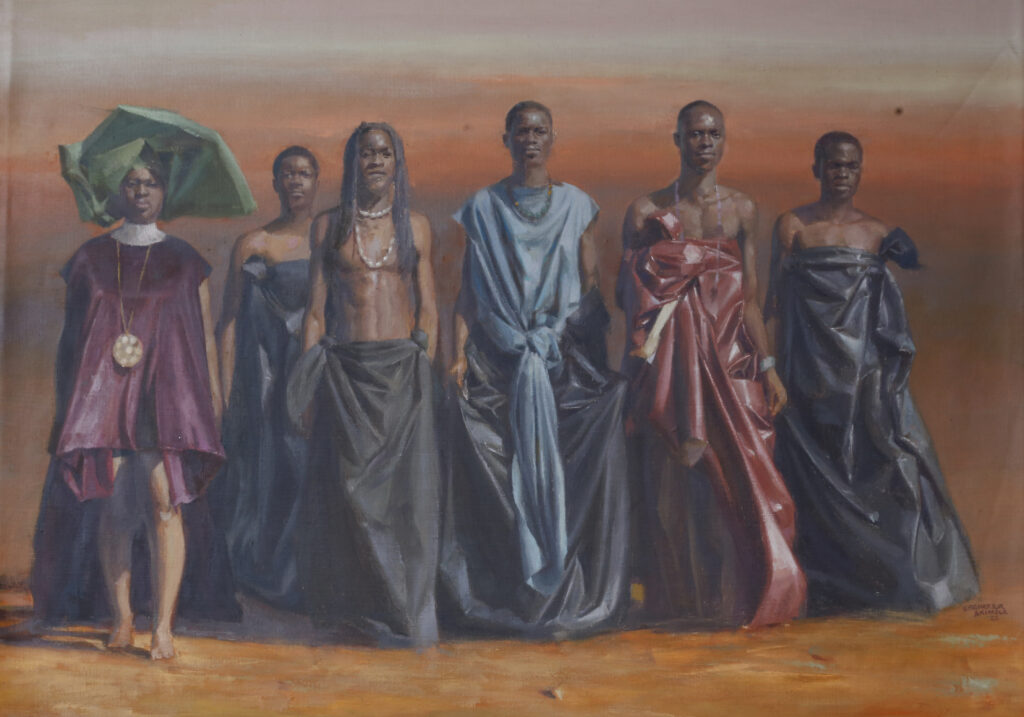
Ebenezer Samuel Akinola
Journey of Mortal Men, 2026
Oil on Linen
79 x 53 cm
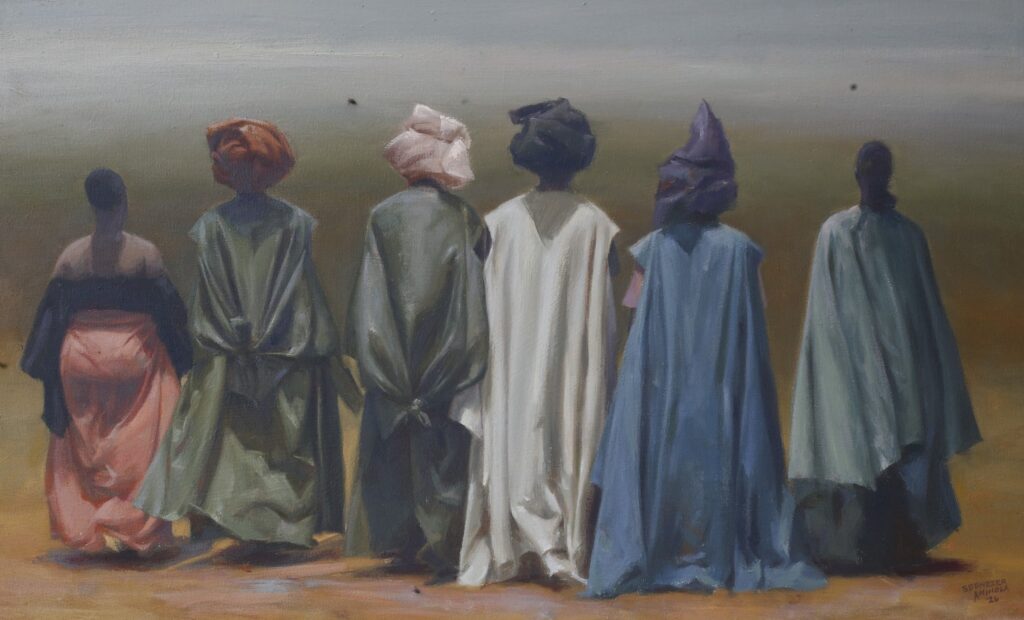
Ebenezer Samuel Akinola
Where the Sky Leads, 2026
Oil on Canvas
81 x 50 cm
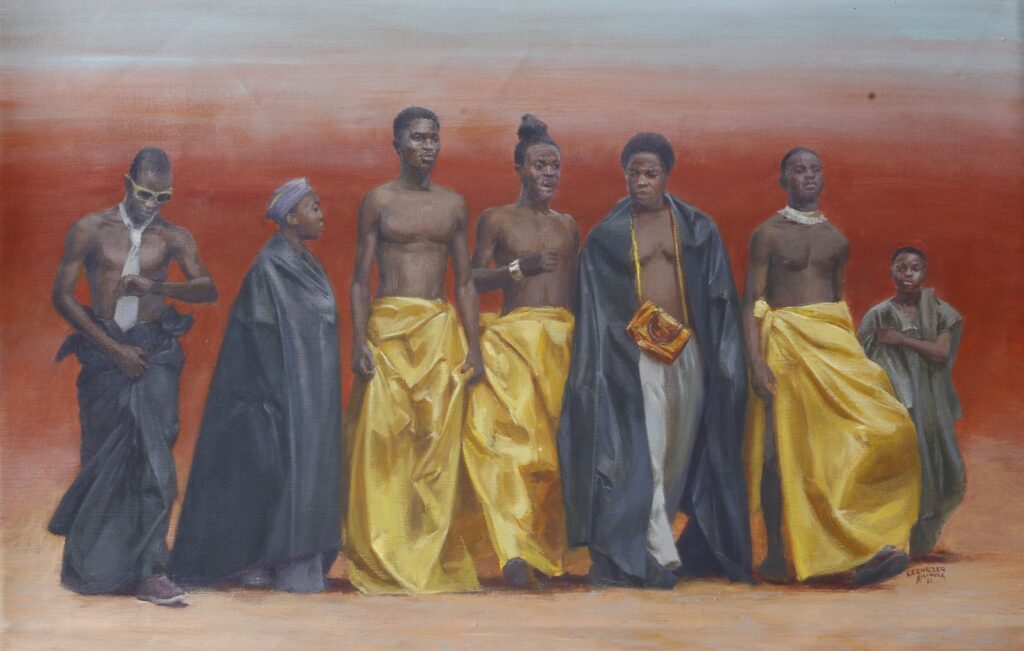
Ebenezer Samuel Akinola
Towards the King’s Palace, 2026
Oil on Canvas
84 x 54 cm